Transcribed by TurboScribe.ai. Go Unlimited
Grace, mercy, and peace to you from God our Father, through our Lord and Savior Jesus Christ, amen. And let us pray. O Lord, send forth your word into our ears that it may bear fruit in our lives, in Jesus’ name, amen.
So how’s your Christmas shopping coming? I know it’s not even December yet. You probably still have Thanksgiving leftovers in your fridge, but I also bet there’s some of you out there who are already done shopping for the year. Then there’s others, like me, who usually don’t even start shopping for Christmas until a few days before Christmas Eve.
Christmas presents that annual challenge of finding the right gifts for all the people on your list. There’s gifts to be bought for grandmas and grandpas, aunts and uncles, moms and dads, husbands and wives, sons and daughters, nieces and nephews, the list goes on. Maybe you braved the crowds last Friday, maybe you stayed home, but either way you have to get the gifts eventually.
And if you are somehow already done with all your Christmas shopping, maybe keep that to yourself for a few weeks while the rest of us endure the chaos. But I mention gifts because I think they’re significant and an often unseen element of today’s gospel reading. Even though the Christmas festivities are well underway in the world outside, in our Lord’s Church we first take time to pause for Advent to prepare our hearts and our minds to properly celebrate the arrival of Jesus, which is exactly why the account of Palm Sunday was read this morning.
I remember for many years wondering why Palm Sunday was the assigned reading for the first Sunday of Advent. I thought we should be reading pre-Christmas stories like the angel visiting Zachariah or Mary or Joseph. Maybe you’ve wondered the same thing.
Maybe you were confused last week when we heard the history of the crucifixion. After all, Lent ended months ago. But there’s a very good reason why these readings are placed where they are, all the way here in November and sometimes December.
You see, it reminds us that the crucifixion and resurrection of Jesus are the heart and soul of everything that we do in our Lord’s Church. And so last week, we ended the church year by remembering why we have a church at all, the cross and resurrection of Jesus. And today, we begin a new church year by hearing of the triumphal entry, another part of the Easter story.
And since the season of Advent is a season in which we reflect on how Jesus comes to us, Palm Sunday is a natural fit. But the effect is to remind us that the cross and resurrection of Jesus are the heart and soul of the church. And therefore, they are the heart and soul of the church year.
They are, quite literally, its beginning, middle, and end. So back to the original question. What does this have to do with gifts? Well, think about Easter.
We are well aware that the events of the first Easter took place over Passover. The richness of that symbolism could fill volumes of books. The typology, the foreshadowing present in the Old Testament Passover, points clearly to what the Messiah would do when he came to earth.
Just as the Israelites were released from bondage to slavery in Egypt by the Passover lamb, so also we are released from slavery to sin, death, and the devil by the death of Jesus, our Passover lamb. Just as the blood of the Passover lamb painted on the doorposts offered a protective covering for the Israelites in Egypt, so also the blood of Jesus covers us so that we are delivered safely in our hour of death. Just as the events of the Passover were to be for the Israelites a mark on their forehead and on their hands, something that changes the way they think and the way they act, so also the death of Jesus, our Passover lamb, changes the way that we think, changes the way that we act.
Like the Israelites of old, we are delivered people. We are not our own. We were bought with a price, therefore we honor God with our bodies.
But there’s one more element to the Passover worth a moment’s reflection, especially today. Listen to God’s instructions to the first Israelites in Egypt about how they should celebrate Passover. The Lord said to Moses and Aaron in the land of Egypt, this month shall be for you the beginning of months.
It shall be the first month of the year for you. Tell all the congregation of Israel that on the tenth day of this month, every man should take a lamb according to their father’s houses, a lamb for a household. You shall keep it until the fourteenth day of the month when the whole assembly of the congregation of Israel shall kill their lambs at twilight.
You see, much like we find the time to find that right gift for the special someone before Christmas actually gets here, the Israelites were to choose their Passover lamb before the celebration of Passover actually begins. They were to choose it on the tenth day of the month and then set it aside and then offer it as a sacrifice on the fourteenth day of the month. Now what they did with the lamb for those days in between is open for a little bit of speculation, but what’s not open for speculation is that any Israelite who was planning on celebrating Passover on Thursday at sundown would need to choose their lamb on the tenth day, which began at sundown on Sunday.
And so we know that Jerusalem was especially crowded during Passover, but have you ever wondered why? Why on Palm Sunday would the streets of Jerusalem be so filled with pilgrims and with travelers if Passover didn’t begin till Thursday? Why are they all there four days early? Well, they’re there because on the Sunday evening or the Monday morning before Passover, they would begin going to the temple to make their choice to choose their Passover lamb, which they would celebrate and sacrifice that year. That’s the setting into which Jesus rides on Palm Sunday. A crowd of people there to look for their own Passover lambs.
These are the people who witnessed the arrival of the true Passover lamb. It’s almost as if God the Father is putting forward Jesus as his chosen lamb on Palm Sunday. And so as we enter the season of Advent, what could be a more appropriate focus of our meditation than that? There’s much to love about Christmas.
I love the music. I actually like the cheesy movies and all their happy endings. I love the nativities and the Christmas cards.
I like the quiet moments and the glow of the tree. But in the midst of it all, we must not forget that Christmas is not the end of the story. And actually, Christmas is not even the beginning of the story.
Christmas isn’t even the main chapter in the story. Because as important a milestone as it is in salvation history, Christmas exists in the shadow of the cross. And so as we ponder the incarnation and the birth of Jesus, we do so with the knowledge that that baby in Mary’s arms is destined to be crucified as the Passover lamb who takes away the sin of the world.
Our joy is not simply that Jesus was born. Our joy is that Christ, our Passover lamb, has been sacrificed and raised from the dead. He will never die again because death has no more dominion over him.
Jesus, our Passover lamb, changes everything. He was truly the perfect gift for an imperfect world. And so we’re reminded once again today of who our God is.
He is the God who gives gifts. You see, so often we’re tempted to think of God as the one who finds his joy by stealing ours. The world tells us that, and our own sinful flesh believes, that our Father in heaven is like a harsh tyrant, that he restrains our sexuality, that he curbs our greed, that he accuses us in our selfishness.
From the world’s point of view, God just sucks all the fun out of life. He tells us that harboring anger in our hearts is as much a violation of his holiness as is acting on that anger. And Satan is always in our ear, sometimes whispering, sometimes shouting that Christianity is a religion of rules, a system of oppression.
And we’re all too easy to agree, tempted to agree, tempted to give in to the world’s invitation to reimagine God. We don’t want to have a God who makes demands on our time and our behavior, so we invent a God for ourselves, usually one who sits on his back porch, puffing on his pipe, rocking in his old wooden chair, shaking his head as he looks out over the world at our antics, at our bad decisions, all the while maintaining that little glimmer in his eyes that says, boys will be boys. We like to imagine a God who shrugs his shoulders at our sin and says something like, well, people will be people.
Nobody’s perfect after all. But that God is a fiction. He’s a God of our own imagination.
That’s not the true God. But the true God is holy. His expectation is holy.
His demands are holy. And we fail to meet them. And no amount of imagination can save us from that reality.
But our Lord can. And more importantly, our Lord does. He saves us through the gifts that he gives, because that’s who he is, the God who gives gifts.
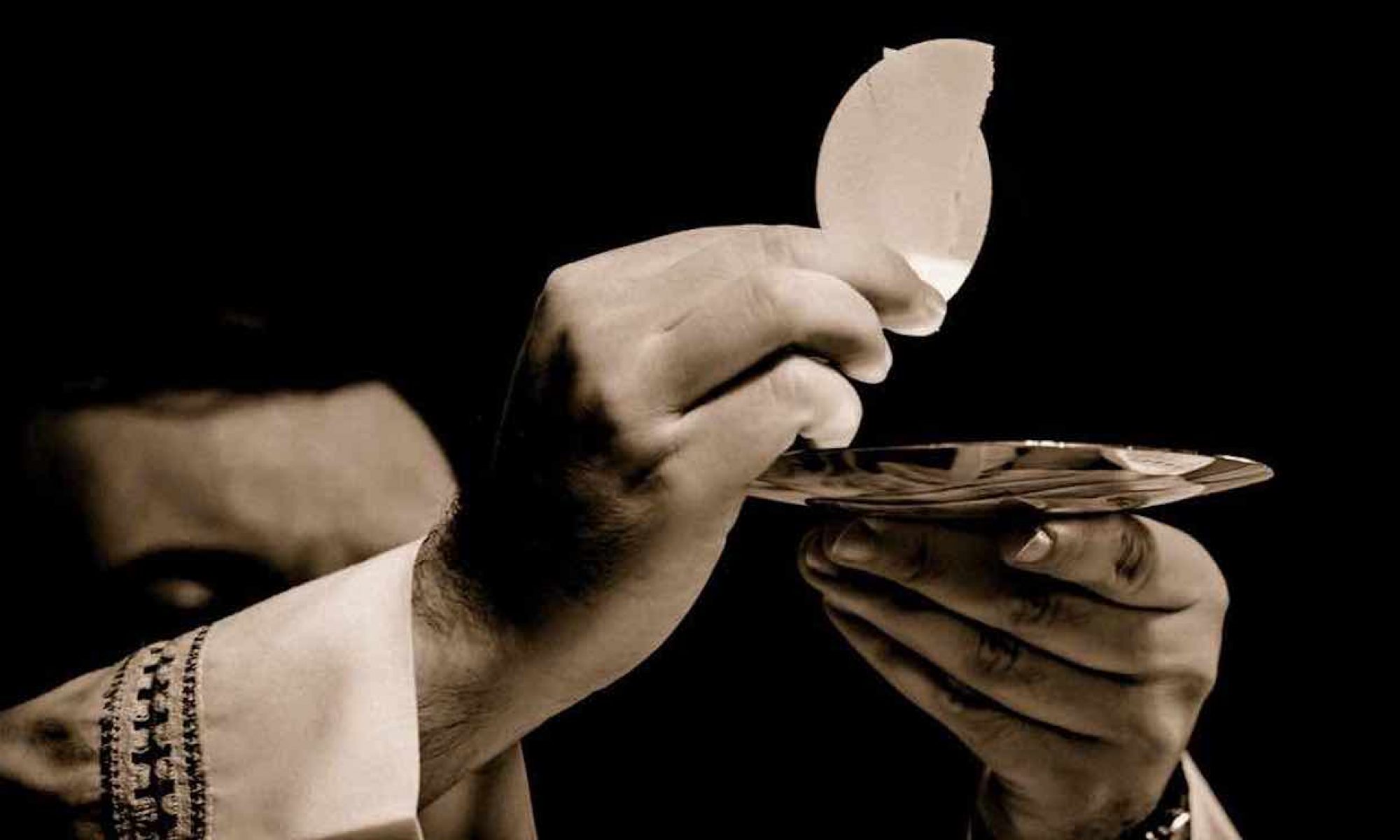
God did not send his son into the world to condemn the world, but that the world might be saved through him. So God sent his son into Jerusalem as the chosen Passover lamb, the sacrifice for the sin of the world, the sacrifice for your sin for mine. God sends his son to us today, the bread and wine of this altar, for the forgiving of our sins, the strengthening of our faith.
And God will send his son on the last day to rescue us from this valley of tears, to take us to be at home with him in the new creation. Because that’s who our God is. The God who gives gifts past, present, and future.
And we are the people who receive his gifts. So this Advent, as we prepare to once again honor the incarnation and the birth of our Savior, we do so remembering that he is a gift. We receive him with repentant joy.
We rejoice in the forgiveness that he brings. And we rest in his protection until the day of his return. May God grant it to us for Jesus’ sake.
Amen.